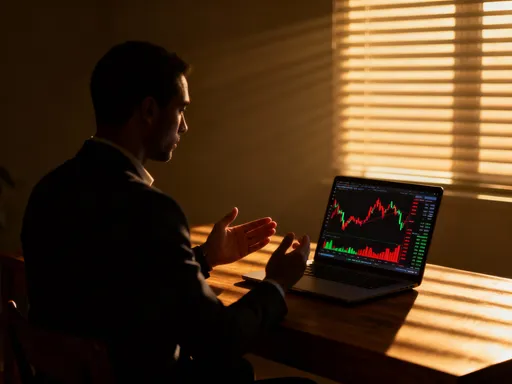
When Timing Meets Strategy: My Quiet Path to Financial Freedom
What if the key to financial freedom isn’t just how you invest—but when? I used to obsess over perfect portfolios, only to miss the bigger picture: timing shapes outcomes more than we admit. It’s not about predicting markets, but recognizing signals—life shifts, economic moods, personal readiness. I’ve rushed in too early, waited too long, and finally learned to act with purpose. This is what I wish I knew earlier: mastering timing isn’t magic. It’s mindset, awareness, and a few smart, repeatable moves.
The Hidden Force Behind Financial Wins
Behind nearly every major financial success story lies a moment—an unspoken inflection point—when action met opportunity. Often, that moment had little to do with intelligence or capital, and everything to do with timing. Consider two individuals with similar income, savings, and investment knowledge. One begins investing in index funds in 2009, shortly after the global financial crisis. The other waits until 2012, when fear has faded and confidence returns. Despite identical strategies, the first investor’s portfolio grows nearly 50% larger over the next decade, simply due to earlier entry. This isn’t luck—it’s the power of timing at work.
Timing extends beyond market cycles. It includes life-stage alignment, such as starting retirement savings in your thirties versus your forties, or refinancing a mortgage when interest rates dip. It also involves emotional preparedness—acting when calm, not when pressured by urgency or fear. A well-timed decision leverages both external conditions and internal readiness. For instance, someone who pays off high-interest debt before investing isn’t just being cautious—they’re timing their financial priorities to maximize long-term gains.
Even entrepreneurship follows this principle. Many small business owners succeed not because their idea is unique, but because they launch when demand is rising and overhead is low. The same concept applies to personal finance: buying a home when mortgage rates are favorable, or increasing contributions to a 401(k) when employer matches improve. These are not grand gambles, but quiet, strategic moves made at the right moment. Over time, such decisions compound, creating a trajectory that feels effortless but is, in fact, deeply intentional.
The truth is, most people underestimate timing because it’s invisible. Unlike a stock price or a savings balance, you can’t track timing on a spreadsheet. But its impact is measurable. Studies show that investors who consistently enter and exit markets near peaks and troughs—regardless of strategy—outperform those who time poorly, even with superior portfolios. This suggests that timing is not a secondary factor; it’s foundational. Recognizing this shifts the focus from chasing returns to cultivating awareness—a skill anyone can develop with practice and reflection.
Recognizing the Right Moment: Signals Over Speculation
Timing is not about crystal balls or gut feelings. It’s about learning to read signals—both in the economy and within yourself. The most reliable moments to act rarely come with fanfare. They arrive quietly, disguised as routine shifts: a steady paycheck for six months, a gradual decline in consumer prices, or a consistent habit of saving $100 a month. These are not dramatic indicators, but they matter. They signal stability, which is the bedrock of sound financial decisions.
Externally, economic trends offer guidance. For example, when inflation begins to stabilize after a period of volatility, it often precedes a window of opportunity for long-term investing. Similarly, when unemployment rates remain low for several quarters, it suggests a resilient job market—making it a reasonable time to take on moderate financial risk, such as starting a side investment. These indicators don’t predict the future, but they help assess the present. The goal isn’t to time the market perfectly, but to avoid acting in clear periods of fragility.
Internally, personal signals are equally important. Are you emotionally prepared to handle market fluctuations? Have you built an emergency fund that covers three to six months of expenses? Is your job secure enough to allow for longer-term planning? These questions aren’t about perfection—they’re about readiness. Acting before you’re ready often leads to panic when setbacks occur. But waiting until every condition feels ideal means waiting forever. The right moment usually arrives when most boxes are checked, not all.
One common mistake is confusing noise for signals. A viral article about a booming stock, a friend’s success with cryptocurrency, or a sudden spike in housing prices can feel like a call to action. But these are often reactions, not reliable indicators. True signals are consistent, measurable, and aligned with your goals. For example, if you’ve been tracking your spending for six months and notice a growing surplus, that’s a signal you may be ready to increase investments. If interest rates on savings accounts have steadily risen over a year, that’s a sign it might be time to reevaluate your cash holdings.
Developing this awareness takes time. It requires stepping back from the daily rush of financial news and asking, “What is actually changing?” rather than “What should I do right now?” This shift in mindset—from reaction to observation—transforms timing from guesswork into a disciplined practice. It allows you to act with clarity, not urgency, and to build wealth steadily, not sporadically.
The Cost of Waiting: How Delay Erodes Opportunity
Procrastination is one of the most expensive habits in personal finance. Unlike a failed investment, which can be learned from, the cost of waiting is silent and cumulative. Every year delayed in saving for retirement, every month spent hesitating before starting an emergency fund, every dip in the market ignored out of fear—these moments don’t just pass by. They compound into lost potential, reducing both wealth and flexibility.
Consider retirement savings. If a 30-year-old invests $300 a month with a 7% annual return, they could accumulate over $600,000 by age 65. But if they wait until 40 to start, contributing the same amount, their total would be less than $300,000. The difference isn’t due to smarter investing—it’s due to ten fewer years of compounding growth. That gap cannot be closed by working longer or saving more later. The earlier years are simply irreplaceable.
Waiting also erodes confidence. The longer someone delays taking control of their finances, the more overwhelming it feels. They may tell themselves they’ll start “when they earn more” or “when things settle down.” But life rarely settles. Children grow, expenses shift, and new demands arise. There is no perfect moment. Those who wait for it often find themselves decades behind, struggling to catch up with larger, riskier moves.
Market downturns illustrate this perfectly. Many investors avoid buying when prices drop, fearing further losses. But history shows that downturns are often the best times to invest. The S&P 500, for example, delivered strong long-term returns for those who bought during or shortly after the 2008 crisis, the 2020 pandemic dip, and other corrections. Those who waited for “certainty” missed the recovery entirely. The market doesn’t wait for hesitation.
The cost of delay isn’t just financial—it’s psychological. It breeds a sense of helplessness, reinforcing the belief that wealth is for others, not for “someone like me.” Breaking this cycle starts with a single step: acting before you feel ready. Even small, consistent actions—automating a $50 monthly transfer to a savings account, enrolling in a retirement plan with a modest contribution—create momentum. They build confidence, which leads to better decisions, which lead to growth. The key is to start, not to start big.
Avoiding the Rush: When Early Action Backfires
While delay is costly, rushing in without preparation can be just as damaging. Timing isn’t only about seizing opportunity—it’s about knowing when *not* to act. Many financial setbacks stem not from inaction, but from premature action driven by emotion rather than strategy. The most common trigger? Hype. Whether it’s a viral stock, a trending cryptocurrency, or a housing boom, excitement can feel like validation. But excitement is not a financial plan.
Behavioral economics shows that people are more likely to invest after prices have risen, not when they’re low. This is the opposite of a sound strategy. During the 2021 meme stock surge, many individuals bought shares at peak prices, only to sell at a loss when the trend faded. They weren’t investing—they were reacting. The timing was driven by FOMO (fear of missing out), not fundamentals. The result? Emotional exhaustion and financial loss.
Overconfidence is another trap. Someone who receives a bonus or sees their portfolio grow may feel ready to take on more risk. But financial readiness isn’t just about numbers—it’s about emotional resilience. Can you sleep at night if your investment drops 20%? Have you tested your risk tolerance in real conditions, or only in theory? Acting too soon, without stress-testing your mindset, often leads to panic selling when markets turn.
Trend-chasing is equally dangerous. Just because an investment is popular doesn’t mean it’s right for you. A neighbor’s success with real estate doesn’t guarantee the same outcome for you, especially if your cash flow, risk tolerance, or goals differ. The best timing comes from alignment—between your financial situation, your goals, and your emotional capacity—not from following the crowd.
The solution is a readiness checklist. Before any major financial move, ask: Do I have an emergency fund? Is my high-interest debt under control? Have I clearly defined my goal and timeline? Do I understand the risks? Am I acting out of clarity, not pressure? This simple process filters out impulsive decisions and ensures that action is grounded in reality. It transforms timing from a gamble into a disciplined practice.
Building Your Timing Framework: A Practical Approach
Timing doesn’t require prediction—it requires preparation. The most effective investors don’t guess the future; they build systems that allow them to act wisely when opportunities arise. This begins with a structured decision-making framework, one that replaces emotion with intention. The framework has four key components: assess personal readiness, evaluate market context, define exit triggers, and set review milestones.
First, assess personal readiness. This means reviewing your financial foundation: emergency savings, debt levels, income stability, and insurance coverage. It also includes emotional readiness—your ability to stay calm during market swings. If any of these areas are weak, the right move may be to strengthen them before investing. For example, paying off a credit card with 18% interest is often a better financial decision than chasing a 7% market return.
Second, evaluate market context. This isn’t about forecasting, but about awareness. Are interest rates rising or falling? Are stock valuations historically high or low? Is inflation stable? These factors don’t dictate action, but they inform it. For instance, when bond yields are rising, it may be a good time to consider fixed-income investments. When stock prices are depressed after a correction, it may be a reasonable moment to increase equity exposure—if you’re prepared for volatility.
Third, define exit triggers. Every investment should have a reason for entry and a reason for exit. This could be a target price, a time horizon, or a change in fundamentals. For example, you might decide to sell a stock if it drops 15% without clear recovery signs, or if your financial goal is reached. These triggers prevent emotional decisions and keep you aligned with your plan.
Fourth, set review milestones. Life changes. Markets change. Your strategy should too. Schedule regular check-ins—quarterly or annually—to assess progress, adjust allocations, and refine your approach. This ensures your timing remains relevant, not rigid. It also builds discipline, turning financial management into a habit rather than a crisis response.
This framework works across scenarios. Whether you’re starting a side investment, adjusting your retirement portfolio, or considering a major purchase, it provides clarity. It doesn’t eliminate risk, but it reduces the risk of poor timing. And over time, it creates a rhythm—a steady, intentional approach to money that compounds not just in wealth, but in peace of mind.
Risk Control: Protecting Gains Without Paralysis
Great timing isn’t just about when to enter—it’s also about when to hold, adjust, or exit. Protecting what you’ve built is as important as growing it. Many investors focus so much on gains that they ignore the need for defense. But wealth isn’t just accumulated; it’s preserved. This requires active risk management, not fear-driven reactions.
One effective tool is the concept of stop-loss logic, adapted for long-term investors. Rather than setting automatic sell orders, you establish mental thresholds. For example, if a stock drops 20% and the underlying business has weakened, it may be time to reassess. But if the drop is due to short-term market noise, holding may be the better choice. The key is to decide in advance, not in panic.
Rebalancing is another crucial practice. Over time, some investments grow faster than others, shifting your portfolio away from your target allocation. For instance, if stocks rise sharply, they may become 80% of your portfolio instead of the intended 60%. Rebalancing—selling some winners and buying underweighted assets—forces you to “sell high and buy low” in a disciplined way. It’s not exciting, but it’s effective.
Recognizing when to lock in gains is equally important. If you’ve achieved a major goal—such as saving for a down payment or reaching a retirement milestone—it may be time to shift to more conservative investments. This isn’t giving up on growth; it’s protecting what matters. For example, moving funds from stocks to bonds or high-yield savings accounts can preserve capital while still earning modest returns.
The difference between smart risk control and fear-based decisions lies in structure. A structured approach uses rules, not emotions. It asks, “Does this action align with my plan?” rather than “Am I scared right now?” This allows you to act calmly when markets turn, avoiding the common trap of selling low and buying high. Real-world examples show that investors who rebalance regularly and stick to their allocation tend to outperform those who chase performance, even if they miss some short-term gains.
Ultimately, risk control isn’t about avoiding loss—it’s about managing it. Every investment carries risk. The goal is to ensure that losses don’t derail your long-term plan. By building safeguards into your strategy, you gain the confidence to stay the course, even when markets are turbulent. This is how timing becomes a tool for stability, not speculation.
The Mindset of the Well-Timed Investor
At its core, timing is not a technical skill—it’s a mindset. It’s the quiet discipline of acting when others hesitate, and holding back when others rush. It’s patience paired with action, caution balanced with courage. The most successful investors aren’t the ones with the most knowledge or the fastest reactions. They are the ones with self-awareness, emotional discipline, and the ability to filter out noise.
Self-awareness means knowing your limits. It means understanding whether you’re acting out of confidence or overconfidence, out of prudence or fear. It involves reflecting on past decisions—what worked, what didn’t, and why. Journaling financial choices can help build this awareness, turning experience into insight.
Discipline keeps you on track. It means following your plan even when it’s boring, even when others are chasing excitement. It means automating savings, sticking to your budget, and reviewing your portfolio on schedule—not when the news headlines scream. Discipline turns good intentions into consistent results.
Detachment from noise is perhaps the hardest skill to develop. The financial world is full of opinions, predictions, and urgent calls to action. But most of it is irrelevant. The well-timed investor learns to focus on what matters: their goals, their plan, their signals. They don’t need to know what the market will do tomorrow. They only need to know what they should do today.
Cultivating this mindset takes time. It grows through small, repeated decisions—choosing to save instead of splurge, to research instead of react, to wait instead of rush. Each choice strengthens the habit of intentionality. Over years, this rhythm becomes second nature. Financial freedom isn’t a single event; it’s the result of thousands of well-timed choices, made quietly, consistently, and with purpose. And that, more than any investment strategy, is the true path to lasting wealth.