Where Art Meets Olive Oil: A Feast for the Senses in Corfu
Corfu isn’t just about turquoise waters and cobbled streets — it’s a living canvas where flavor and artistry blend. As I wandered through sunlit villages and family-run tavernas, I realized that every dish tells a story, every olive grove feels like a brushstroke. This island doesn’t serve food — it performs it. Here, cuisine is an art form shaped by history, terrain, and passion. Come with me to discover how Corfu’s culinary culture is a masterpiece in motion.
The Palette of Place: How Corfu’s Landscape Shapes Its Cuisine
Corfu’s geography is not merely scenic — it is foundational to its culinary identity. Nestled in the Ionian Sea, the island enjoys a rare convergence of Mediterranean climate, fertile soil, and maritime influence that together nurture a remarkable diversity of ingredients. Rolling hills draped in silver-green olive groves stretch toward the coast, while inland valleys bloom with citrus orchards and wild herbs. The air carries salt from the sea and the perfume of blooming thyme, creating a sensory prelude to the meals that follow. This is a place where the land does not simply provide food — it inspires it.
The island’s terrain directly shapes what appears on the plate. In the village of Vouniatades, perched in the central highlands, kumquat trees thrive in the mild microclimate. These small, golden citrus fruits — a legacy of British colonial introduction in the 19th century — are now integral to Corfiot gastronomy. They are preserved in syrup, distilled into liqueur, or candied into delicate sweets. Their tart-sweet flavor echoes the island’s own duality: lush yet rugged, traditional yet subtly cosmopolitan. Similarly, mountain beekeepers harvest thyme honey from hives placed near wild herb slopes, where bees gather nectar from native flora. The resulting honey is rich, aromatic, and slightly medicinal — a natural expression of terroir.
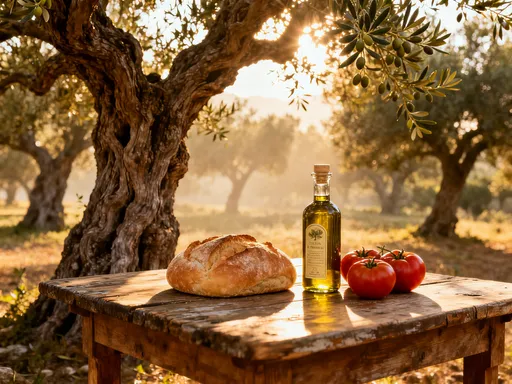
Coastal areas contribute their own elements. Sea breezes temper summer heat, allowing vegetables like tomatoes, zucchini, and eggplants to develop deep flavor without overripening. Along the shoreline, small family plots yield capers, figs, and artichokes, often grown in stone-walled terraces that conserve moisture and reflect sunlight. Even the olive oil — the cornerstone of Corfiot cooking — bears the mark of the landscape. Koroneiki olives, pressed shortly after harvest, produce oil with a grassy aroma, a peppery finish, and a golden-green hue. It is not just a cooking medium but a flavor agent, drizzled generously over salads, grilled fish, and bread. The land, in every sense, is present in every bite.
What makes Corfu’s culinary landscape unique is how deeply its people understand this connection. Farmers speak of their soil with reverence; cooks describe ingredients as ‘gifts of the island.’ There is no separation between nature and nurture — the environment is seen as a collaborator in the creative process. This awareness transforms cooking from routine to ritual, and eating into an act of recognition. When you taste a tomato grown in Corfiot sun, seasoned with local salt and drenched in estate-pressed oil, you are not just consuming food — you are experiencing the island’s soul.
Taste as Expression: Food as Cultural Artistry
In Corfu, traditional dishes are not mere recipes — they are edible heirlooms, each one a composition of history, technique, and emotion. Take pastitsada, the island’s celebrated Sunday stew. At first glance, it is a rich, tomato-based dish featuring rooster slow-cooked with cinnamon, cloves, and bay leaves, served over thick strands of pasta. But to call it simply ‘chicken with sauce’ is to miss its deeper resonance. Pastitsada is a culinary sonnet — layered, rhythmic, and deeply expressive. The long braise, often lasting four hours or more, allows the meat to absorb the warmth of the spices, creating a harmony that feels both comforting and sophisticated.
Similarly, bourdeto — a spicy fish casserole made with scorpionfish or monkfish — reveals the island’s maritime roots and its openness to bold flavors. The dish gets its heat from liberal use of paprika, a legacy of Balkan influence, while the slow simmer ensures the fish remains tender despite the robust seasoning. The presentation is unpretentious, yet the experience is profound. Each spoonful carries the depth of the sea and the fire of the hearth. Then there is sofrito, veal cooked in a white wine and garlic sauce, a dish that speaks directly to Corfu’s Venetian past. The name itself is derived from the Italian *soffritto*, though the Corfiot version has evolved into something distinct — delicate, aromatic, and subtly tangy.
What unites these dishes is not just flavor but intention. They are prepared with care, often for family gatherings or religious celebrations, and passed down through generations like cherished works of art. In many homes, the recipe is not written — it is remembered, adjusted by taste, guided by instinct. A pinch of cinnamon here, a splash of vinegar there — these are not arbitrary choices but artistic decisions, refined over decades. The cook is not merely feeding bodies but expressing identity, memory, and love.
Even the act of serving reflects this artistic sensibility. Meals are arranged with attention to color and texture: a deep red tomato salad beside golden fried zucchini, a wedge of creamy feta dusted with oregano. There is no rigid plating, yet the result feels instinctively balanced — like a still life painted by nature. In Corfu, food is not an afterthought; it is the centerpiece of cultural expression, a way of saying, “This is who we are.” To eat here is to engage with a living tradition, one that values patience, seasonality, and soul.
Markets as Galleries: The Aesthetic of Daily Provisioning
One of the most revealing experiences in Corfu is visiting its markets — not as a tourist, but as a participant in daily life. The central market in Corfu Town, housed in a 19th-century Venetian building with arched windows and stone floors, functions as both a marketplace and a living exhibition. Stalls overflow with seasonal abundance: pyramids of eggplants, baskets of wild greens, and crates of figs so ripe they split at the touch. The colors are vivid — deep purple aubergines, emerald cucumbers, ruby-red peppers — arranged not for sale alone, but as if for display in a still-life painting.
Here, food is not hidden under plastic wrap or stacked uniformly. It is presented with an organic elegance that feels both accidental and deliberate. A vendor drapes grape leaves over a block of feta to keep it cool, creating a natural canopy of green and white. Another arranges olives in concentric circles — black, green, and amfivala — each variety brined differently, each with its own character. The scent is intoxicating: garlic, basil, sun-warmed tomatoes, and the sharp tang of aging cheese. To walk through this space is to engage all the senses at once, to witness the artistry of the everyday.
Rural markets, smaller and more intimate, offer a different rhythm. In villages like Doukades or Lakones, farmers bring produce from their own land — bunches of wild oregano tied with twine, jars of honey still flecked with pollen, homemade pasta dried on wooden racks. There is no branding, no packaging — just food in its most honest form. Conversations unfold slowly; prices are negotiated with smiles, not urgency. A grandmother might hand you a sample of her lemon pie, asking not for payment but for your opinion. These exchanges are not transactions — they are moments of connection, small acts of cultural hospitality.
What makes these markets so powerful is their authenticity. They are not staged for visitors; they exist because people need to eat, to trade, to share. Yet in their simplicity, they become profound. Every basket, every label handwritten in Greek, every sun-weathered face behind a stall contributes to a larger portrait of island life. To shop here is to practice mindfulness — to choose a tomato not because it is perfect in shape, but because it smells of summer. In Corfu, even the most routine errand becomes an aesthetic experience, a quiet celebration of what the earth provides.
The Rhythm of the Table: Meals as Performance
Dining in Corfu is not a meal — it is a performance with its own tempo, cast, and setting. A typical evening begins not with a main course, but with a procession of small plates: olives, capers, tzatziki, grilled halloumi, and slices of crusty bread dipped in olive oil. This meze is not appetizer; it is overture, setting the tone for what follows. Conversation flows easily, punctuated by laughter and the clink of glasses filled with local wine or crisp white kumquat liqueur. Time does not press forward — it expands, shaped by the company and the moment.
As the sun dips below the Ionian Sea, casting a golden glow over whitewashed tavernas with blue shutters, the next act begins. Grilled octopus arrives, tender and charred at the edges, served with lemon and parsley. A platter of fresh sardines follows, simply salted and cooked over wood fire. Each dish is brought out when it is ready, not according to a rigid schedule, but in harmony with the flow of the evening. There is no rush to clear plates or serve dessert. The meal unfolds like a symphony — movements building on one another, each note given its due space.
The pacing is intentional. Corfiots do not eat to finish; they eat to savor. A single dinner can last three or four hours, especially on weekends or holidays. Children play near the water while elders recount stories from decades past. Wine is poured freely, not to intoxicate, but to lubricate connection. Even the silence between bites feels meaningful — a pause for reflection, for appreciation. When dessert finally arrives — perhaps a slice of baklava soaked in honey, or a bowl of fresh watermelon — it is not an end, but a gentle conclusion, like the final chord of a song.
This rhythm is not accidental. It reflects a worldview that values presence over productivity, relationship over efficiency. In a world that often treats meals as fuel, Corfu reminds us that eating can be an art form — one that requires time, attention, and joy. To sit at a Corfiot table is to be invited into a ritual older than memory, where food is not just consumed, but celebrated.
Artisans of Flavor: Meeting the Makers
Behind every dish in Corfu is a maker — someone whose hands have shaped, stirred, or harvested its ingredients. These are not factory workers or anonymous suppliers, but individuals whose lives are woven into the island’s culinary fabric. A lemon liqueur distiller in the village of Benitses, for example, may spend months macerating peels in alcohol, adjusting sugar levels by taste, and bottling each batch by hand. His shed, cluttered with jars and copper stills, is less a workshop than a studio — a place where science and intuition meet.
Elsewhere, a forager climbs the slopes of Mount Pantokrator at dawn, gathering wild greens like vlita and dandelion leaves. She knows which plants grow in shaded ravines, which appear after spring rains, and which must be harvested before the sun grows too strong. Her knowledge is not learned from books but passed down through generations, part of an oral tradition as vital as any recipe. When her greens appear in a taverna salad, they carry not just flavor, but story.
Bakers, too, play a quiet but essential role. In village ovens heated with olive wood, loaves of bread rise slowly, their crusts crackling as they emerge golden and fragrant. These ovens are often communal, used by multiple families who bring their dough in the early morning. The baker — sometimes a retired fisherman, sometimes a woman who has tended the oven for thirty years — oversees the process with quiet authority. The bread is not sold by the slice but by the weight, wrapped in paper and carried home like a treasure.
What unites these artisans is their dedication to craft. They do not measure success in profit margins or output, but in quality, tradition, and pride. Their work is slow, often unnoticed by tourists, yet it sustains the island’s culinary soul. When you taste their products, you are not just enjoying food — you are tasting patience, resilience, and love. In Corfu, flavor is not manufactured; it is cultivated, one careful step at a time.
Creative Crossroads: Venetian, Greek, and Balkan Influences on the Plate
Corfu’s cuisine cannot be reduced to a single tradition — it is a mosaic, shaped by centuries of cultural exchange. As a crossroads of the Mediterranean, the island has been ruled by Greeks, Romans, Byzantines, Venetians, French, and British, each leaving an imprint on its food. The most enduring influence, however, is Venetian. For over four centuries, Venice controlled Corfu, bringing with it pasta-making techniques, rich sauces, and a love of layered flavors. Today, this legacy lives on in dishes like pastitsada and sofrito, where Italian structure meets Greek intensity.
But the story does not end there. During the 19th century, Corfu became a refuge for political exiles from the Balkans, particularly from Albania and Epirus. These communities brought with them bold spices, smoked meats, and preservation methods suited to mountain climates. Paprika, once uncommon in Greek cooking, became a staple in Corfiot kitchens, lending heat to fish stews and meat dishes. Similarly, the use of sour cream in sauces reflects a subtle Slavic touch, a quiet echo of northern traditions.
French influence, though briefer, also left its mark. During the Napoleonic era, French chefs introduced techniques like flambéing and the use of wine reductions. Some older Corfiot recipes include references to *beurre blanc* or *sauce Robert*, adapted over time to local tastes. Even the island’s pastry culture — with its delicate phyllo layers and honeyed fillings — reveals a blend of Ottoman, Venetian, and French styles, each contributing to a sweet, sticky evolution.
What makes Corfiot cuisine so remarkable is how seamlessly these influences have merged. There is no sense of conflict or competition — only synthesis. A single meal might include Italian-style pasta, Balkan spices, French technique, and Greek ingredients, all harmonizing on one plate. This is not fusion cuisine in the modern sense, but a natural evolution born of history and necessity. In Corfu, the kitchen is a space of cultural dialogue, where borders blur and flavors unite.
How to Taste Corfu Like an Artist
To truly experience Corfu’s culinary artistry, one must approach it not as a consumer, but as a participant. Begin by slowing down. Resist the urge to rush from site to site. Instead, linger in a village square, order a coffee, and watch how locals move through their day. Notice the rhythm of the market, the way a fisherman cleans his catch, the way a grandmother folds dough for pita. These moments are not distractions — they are part of the story.
Engage your senses fully. Smell the herbs before you buy them. Touch the crust of a fresh loaf. Listen to the sizzle of octopus on the grill. Taste olive oil by drizzling it on bread and letting it linger on your tongue. Ask questions — not just “What is this?” but “How did you make it? Who taught you?” Most Corfiots are proud of their food and happy to share. These conversations deepen your understanding and create connections that last beyond the trip.
Consider revisiting the same taverna or market stand. Familiarity reveals nuance — a slight change in seasoning, a new seasonal ingredient, a different preparation. You may begin to recognize the cook’s style, just as you would an artist’s brushwork. Keep a journal or sketchbook. Doodle a plate of meze, write down a flavor combination that surprises you, or photograph the texture of a cheese rind. These small acts of recording help you remember not just what you ate, but how it made you feel.
For a more immersive experience, visit in the shoulder seasons — late spring or early autumn. The crowds are thinner, the pace more relaxed, and the produce at its peak. Local festivals often coincide with harvests, offering opportunities to taste food in its most authentic context. Whether it’s a kumquat fair in February or a wine celebration in September, these events are windows into the island’s living culture.
Finally, approach each meal with curiosity and gratitude. Recognize that every dish is the result of generations of knowledge, labor, and love. When you eat in Corfu, you are not just feeding yourself — you are joining a centuries-old conversation between land, people, and history. To taste like an artist is to see beauty in the ordinary, to find meaning in the meal, and to leave not just full, but transformed.
In Corfu, eating is never just sustenance — it’s participation in a centuries-old creative dialogue. From the curve of a handmade spoon to the garnet glow of a tomato simmered in olive oil, every detail invites you to see, savor, and feel. The true masterpiece? The island itself — alive, layered, and always serving beauty on a plate.