You Won’t Believe These Hidden Art Spaces in Rio de Janeiro
Rio de Janeiro isn’t just about beaches and Carnival—it’s a city pulsing with creative energy. Beyond the postcard views of Christ the Redeemer and Copacabana, tucked away in side streets and repurposed buildings, lies a vibrant underground art scene few travelers ever see. I stumbled upon these spaces by chance, and each one felt like a secret whispered by the city itself—raw, authentic, and unforgettable. These are not polished museums or high-priced galleries, but living, breathing spaces where paint drips from ceilings, music spills from open windows, and stories unfold on cracked walls. For those willing to step off the tourist path, Rio reveals a different kind of beauty—one shaped by resilience, imagination, and community.
The Soul of Rio: Where Art Lives Beyond the Tourist Trail
Rio de Janeiro is often celebrated for its natural grandeur—golden beaches, emerald mountains, and iconic landmarks that draw millions each year. Yet beneath this postcard-perfect surface beats a cultural rhythm far more intimate and powerful. In neighborhoods like Lapa, Catete, and São Cristóvão, art thrives not in isolation, but as part of daily life. It climbs up staircases, wraps around corners, and transforms forgotten walls into storytelling canvases. This is the soul of Rio: not confined to stages or museums, but alive in the streets, studios, and shared spaces where creativity meets community.
For many visitors, the idea of Rio begins and ends with sunbathing on Ipanema or hiking to the Christ statue. But those who venture beyond these well-trodden paths discover a city deeply committed to self-expression. The art found in these hidden corners is not made for Instagram likes or souvenir shops. It speaks of identity, resistance, joy, and memory. Murals honor Afro-Brazilian heritage, sculptures reclaim abandoned lots, and performance artists turn sidewalks into impromptu theaters. This is art that doesn’t wait to be seen—it insists on being felt.
Why does this matter for travelers? Because true connection begins where tourism ends. When you step into a repurposed warehouse filled with experimental installations or pause to talk with a muralist painting a tribute to local elders, you’re no longer just observing culture—you’re participating in it. These moments foster empathy, spark curiosity, and create memories that outlast any beach day. Rio’s hidden art spaces offer a rare gift: the chance to experience a city not as a spectacle, but as a living story, still being written.
From Factories to Galleries: The Rise of Urban Art Hubs
One of the most exciting transformations in Rio over the past two decades has been the reinvention of industrial spaces into thriving cultural centers. Once-neglected warehouses and disused factories, especially in the port-adjacent district of Porto Maravilha, have become incubators for artistic innovation. These buildings, with their high ceilings, raw brick walls, and expansive floors, provide the perfect canvas for large-scale installations, immersive exhibitions, and collaborative workshops. What was once a symbol of economic decline has become a beacon of creative renewal.
In São Cristóvão, a former industrial zone in the North Zone of Rio, a network of artist collectives has turned abandoned factories into dynamic art hubs. Here, graffiti artists share walls with ceramicists, dancers rehearse alongside sculptors, and sound engineers record live performances in what used to be storage rooms. These spaces are not curated by commercial galleries but by the artists themselves, fostering a sense of ownership and authenticity that is increasingly rare in mainstream art scenes. Visitors are often welcomed not as passive observers, but as guests in a creative ecosystem.
The transformation of these urban spaces reflects a broader cultural shift in Rio—one that values reuse, resilience, and local empowerment. Rather than importing international art trends, these hubs draw from the city’s own rhythms, music, history, and social realities. An old textile mill might now host an exhibition on the legacy of working-class communities, while a decommissioned train depot becomes a venue for Afro-Brazilian drumming circles and visual art. These spaces do more than display art; they preserve memory, challenge narratives, and give voice to those often left out of official histories.
For travelers, visiting these urban art hubs offers a chance to see how creativity can revitalize entire neighborhoods. Unlike traditional museums, which often feel static, these spaces are constantly evolving. A visit one month might reveal a massive mural in progress; the next, a pop-up performance or community market. This fluidity makes each experience unique, and it underscores a powerful truth: art is not just something to be preserved—it is a force for transformation.
Meeting the Makers: Artists Shaping Rio’s Creative Pulse
The heart of Rio’s underground art scene lies not in its spaces, but in the people who fill them. Behind every mural, sculpture, and performance is an artist with a story—one shaped by personal history, cultural roots, and the realities of life in a city of contrasts. I had the privilege of speaking with several of these creators during studio visits in Santa Teresa and Madureira, and their passion was as striking as their work. These are not artists chasing fame or fortune, but individuals deeply committed to their craft and their communities.
One such artist, Maria Helena, works from a small atelier tucked behind a winding staircase in Santa Teresa. Her large-scale textile pieces incorporate traditional Brazilian embroidery techniques, reimagined through modern abstract forms. She told me how her grandmother taught her to sew as a child, and how those early lessons became a way to process grief, identity, and social change. “My art is my language,” she said, “especially when words fail.” Her studio, filled with colorful threads and half-finished canvases, felt like a sanctuary—a place where memory and imagination coexist.
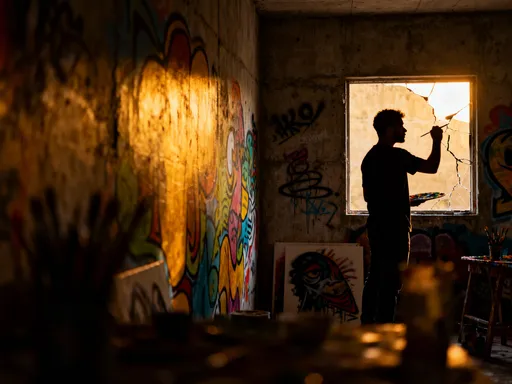
Another compelling figure is Rafael, a street artist from the North Zone who goes by the name “Rafa da Rua.” He began painting as a teenager, using abandoned walls as his first canvas. Today, his bold, graphic murals can be found across Rio, often depicting powerful images of Black Brazilian women, children playing in favela alleys, and symbols of resistance. He works with a collective called “Arte na Periferia,” which mentors young artists from low-income neighborhoods. “We don’t just paint walls,” he explained. “We paint possibilities.”
These artists, and countless others like them, are not isolated figures but part of a larger network of support, collaboration, and mutual inspiration. Many participate in artist residencies, community workshops, and public art projects funded by local cultural initiatives. Their work is not created in silence, but in dialogue—with each other, with their neighborhoods, and with the city at large. For travelers, meeting these creators offers a rare intimacy, a chance to hear firsthand how art becomes a form of survival, celebration, and change.
How to Find These Hidden Gems: A Practical Explorer’s Mindset
Discovering Rio’s hidden art spaces requires more than a map—it demands curiosity, openness, and a willingness to wander. Unlike major attractions with clear signage and online listings, these venues often operate under the radar, announced only through word of mouth, local flyers, or social media posts in Portuguese. But that’s part of their charm. The act of finding them becomes its own adventure, a slow unfolding of surprises rather than a checklist of sights.
One of the most reliable ways to uncover these spaces is to start in known cultural neighborhoods and then move sideways. Santa Teresa, with its cobblestone streets and bohemian vibe, is a natural starting point. Visit the Centro Cultural Municipal Parque das Ruínas, a stunning open-air venue with panoramic views, and then strike up a conversation with staff or fellow visitors. Ask, “Onde posso ver arte local?” (“Where can I see local art?”). More often than not, someone will point you toward a nearby studio, collective, or upcoming opening.
Another valuable tip is to attend Friday night *aberturas*—gallery openings that are especially common in Botafogo, Flamengo, and Lapa. These events are lively, social affairs, often accompanied by live music, wine, and casual conversation. While some galleries cater to collectors, many smaller spaces welcome the public with genuine warmth. Arriving early allows time to explore the work and chat with artists or curators, who are usually present and eager to share insights.
Walking is one of the most effective tools for discovery. In areas like Catete or Andaraí, turning off the main avenues and exploring side streets can lead to unexpected finds: a brightly painted courtyard hosting a sculpture garden, a converted garage displaying photography, or a community center offering free art classes. Look for clusters of street art, open doors with music drifting out, or hand-painted signs reading “Ateliê Aberto” (“Open Studio”). These are often clues that creativity is nearby.
While digital tools like Google Maps can help with navigation, they should not be the only guide. Some of the most memorable spaces I found had no online presence at all. Instead, rely on human connections—talk to bookstore owners, café staff, or musicians playing on street corners. Many locals are proud of their neighborhood’s artistic life and happy to share it with respectful visitors. The key is to move slowly, listen closely, and let Rio reveal itself in its own time.
Timing Your Visit: When Art Comes Alive in Rio
To fully experience Rio’s underground art scene, timing is essential. While creativity flows year-round, certain periods bring heightened activity, with galleries, collectives, and public spaces coming alive in coordinated events. Planning your visit around these moments can dramatically increase your chances of encountering vibrant, dynamic art experiences.
One of the most significant events is the annual *Rio Open House*, typically held in the fall. Modeled after similar initiatives in other global cities, this weekend-long festival opens the doors of hundreds of buildings not usually accessible to the public—including private studios, architectural landmarks, and experimental art spaces. Artists, architects, and designers invite visitors to explore their work environments, offering guided tours, demonstrations, and interactive installations. It’s an unparalleled opportunity to see behind the scenes of Rio’s creative world.
Another highlight is the monthly *Noite dos Museus* (Museum Night), when museums and cultural centers across the city extend their hours and offer free admission, live performances, and special exhibitions. While some venues are mainstream, many smaller institutions and independent galleries participate, using the night to showcase emerging artists and community projects. Botafogo and Santa Teresa are particularly lively during these events, with streets buzzing with visitors and pop-up art displays.
Local gallery nights, often held on the first Friday of each month, are another excellent opportunity. In neighborhoods like Lapa and Glória, clusters of galleries open their doors simultaneously, creating a walking tour of contemporary art. These evenings have a festive, inclusive atmosphere, drawing both art enthusiasts and casual passersby. Food trucks, musicians, and impromptu dance performances often add to the energy, turning the night into a celebration of culture.
Seasonal patterns also influence the rhythm of Rio’s art life. The months following Carnival, from March to May, tend to be especially active, as artists channel the energy of the festival into new projects. Conversely, the peak summer months of December and January can be quieter, as many residents travel or focus on family gatherings. If you visit during this time, prioritize scheduled events or reach out to cultural centers in advance to confirm openings.
For those interested in street art, early morning hours offer a unique glimpse into the creative process. Many muralists work at dawn to avoid heat and crowds, and walking through neighborhoods like São Cristóvão or Madureira during this time might allow you to witness a piece being born. It’s a rare and moving experience—one that connects you not just to the art, but to the labor and love behind it.
Navigating with Respect: Etiquette and Awareness in Local Spaces
As rewarding as it is to explore Rio’s hidden art spaces, doing so with sensitivity and respect is essential. Many of these venues exist within close-knit communities where art and daily life are deeply intertwined. Entering these spaces is not like visiting a commercial gallery—it’s more like being invited into a shared cultural space, one shaped by history, identity, and trust.
One of the most important principles is to observe before engaging. When you arrive at a studio, mural site, or community art center, take a moment to pause and absorb the environment. Is photography allowed? Are visitors expected to speak quietly? Is there a host or guide present? In many cases, simply smiling and nodding can open the door to conversation. If no one approaches you, it’s perfectly acceptable to ask, “Posso olhar?” (“May I look?”) or “É permitido tirar fotos?” (“Is it okay to take photos?”). Most artists are happy to say yes—especially if you show genuine interest.
Respect also means recognizing that not all art is meant for sale or public display. Some works are deeply personal, tied to family or community rituals, or created as part of healing processes. In favela-based art projects, for example, murals may commemorate lost loved ones or mark social struggles. Taking photos without permission—or worse, sharing them online without context—can feel invasive. When in doubt, ask first, listen to the response, and follow local cues.
Supporting artists ethically is another key aspect of responsible visiting. If you love a piece and want to take something home, inquire about purchasing options. Many artists sell prints, postcards, or small works at modest prices. Even if you don’t buy, a kind word, a thank-you, or a small donation can make a meaningful difference. Avoid haggling or treating the space like a market; these are creative sanctuaries, not souvenir stalls.
Finally, be mindful of your presence. Some neighborhoods are still working to overcome stigma or economic challenges, and an influx of outsiders can sometimes feel disruptive. Dress modestly, speak softly, and avoid large groups that might overwhelm small spaces. The goal is not to take from the community, but to connect with it—briefly, humbly, and with gratitude.
Why These Spaces Matter: Art as a Bridge to Authentic Connection
In an age of fast travel and curated experiences, Rio’s hidden art spaces offer something increasingly rare: authenticity. They remind us that the most profound travel moments don’t come from ticking off landmarks, but from slowing down and allowing ourselves to be moved. These intimate venues—where paint peels from the walls and voices echo through unfinished halls—invite us not just to see, but to feel.
Art, at its best, is a bridge. It connects strangers through shared emotion, transforms forgotten spaces into places of meaning, and gives voice to stories that might otherwise go unheard. In Rio, where contrasts are stark and life moves at a relentless pace, these creative pockets serve as oases of reflection and resilience. They remind us that beauty can emerge from struggle, that community can be built through collaboration, and that even in the most unexpected corners, human creativity endures.
For the traveler, especially one seeking depth and connection, these spaces offer a different kind of souvenir—one that can’t be bought, but must be earned through presence, openness, and respect. The memory of a conversation with an artist, the image of a mural glowing in the late afternoon light, the sound of a drum circle rising from a repurposed warehouse—these are the moments that linger long after the trip ends.
Rio de Janeiro will always have its beaches and its festivals, and they will always draw crowds. But for those willing to look deeper, the city offers another kind of magic—one painted in bold colors, whispered in quiet studios, and lived in the daily acts of creation. Let this be your invitation: to wander, to wonder, and to let art guide you to the heart of what travel can truly be.